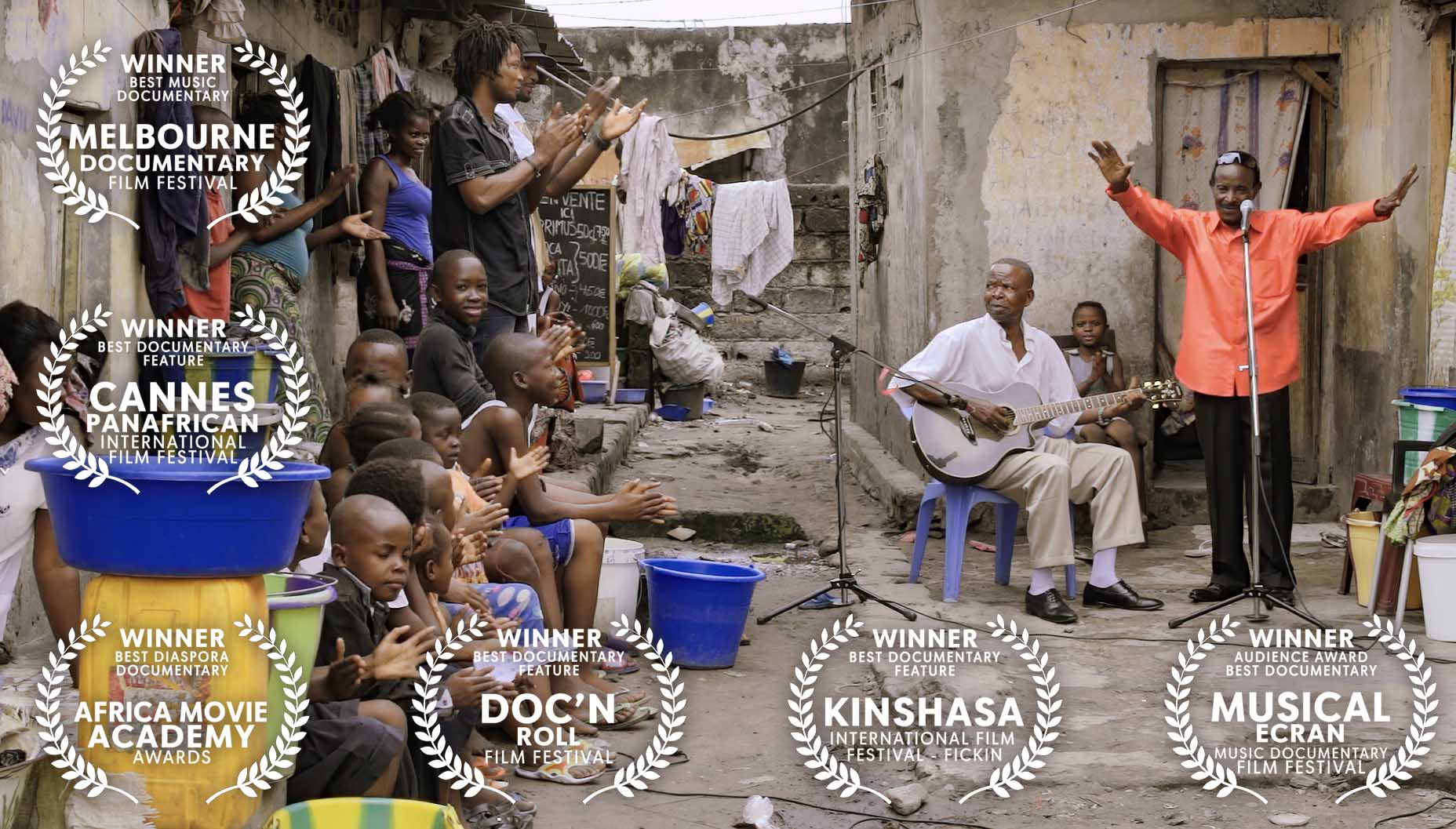
The Rumba Kings has screened at more than 60 film festivals across four continents, won 13 awards, and received 11 nominations. The film has been seen by audiences across Europe, Africa, Asia, and the Americas.
It was selected by The Guardian as one of the best foreign films of 2021, and featured in Rolling Stone, Songlines Magazine, TVE (Spain), TV5 and RTS (French-language international networks).
Key festival appearances included Sydney Film Festival, Brussels International Film Festival, DOXA Documentary Film Festival, DOC NYC, Melbourne Documentary Film Festival, and Peter Barakan's Music Film Festival in Japan, where the film was shown at several venues across the country.
Selected Awards:
- Best Music Documentary — Melbourne Documentary Film Festival
- Best Documentary — DOC'n Roll Film Festival, London
- Best Feature-Length Documentary — Cannes Pan-African International Film Festival
- Best Feature-Length Documentary — FICKIN, Kinshasa International Film Festival
- Best Diaspora Documentary — African Movie Academy Awards
- Special Mention Jury Award for Best Documentary — Montreal International Black Film Festival
"A love letter to Congolese people."
— The Guardian, selected as one of the best foreign films of 2021.
"The Rumba Kings stands as the definitive documentary of one of the world's great musical forms."
— Songlines Magazine
"The Rumba Kings is a powerful musical experience that finally places Franco Luambo, Grand Kallé and Dr. Nico in their rightful place among the finest musicians of the world, all the while masterfully showing us why Congo is one of the motherlands of music."
— Jeffrey Levy-Hinte, Editor, Oscar-winning When We Were Kings
"An amazing film. The beauty, dignity, talent and soul of Congo is perfectly represented. Everyone needs to see this film."
— Mark Johnson, Grammy-winning producer, Playing for Change
"This film fills a hole in our knowledge about how music traveled in the postcolonial black world. Beautifully shot and recorded, rich with archival material, its loving dedication to the music and the musicians lights up every frame."
— Ned Sublette, Author, Cuba and its Music
"The one film that all you music lovers have been waiting for."
— Pan African Music Magazine
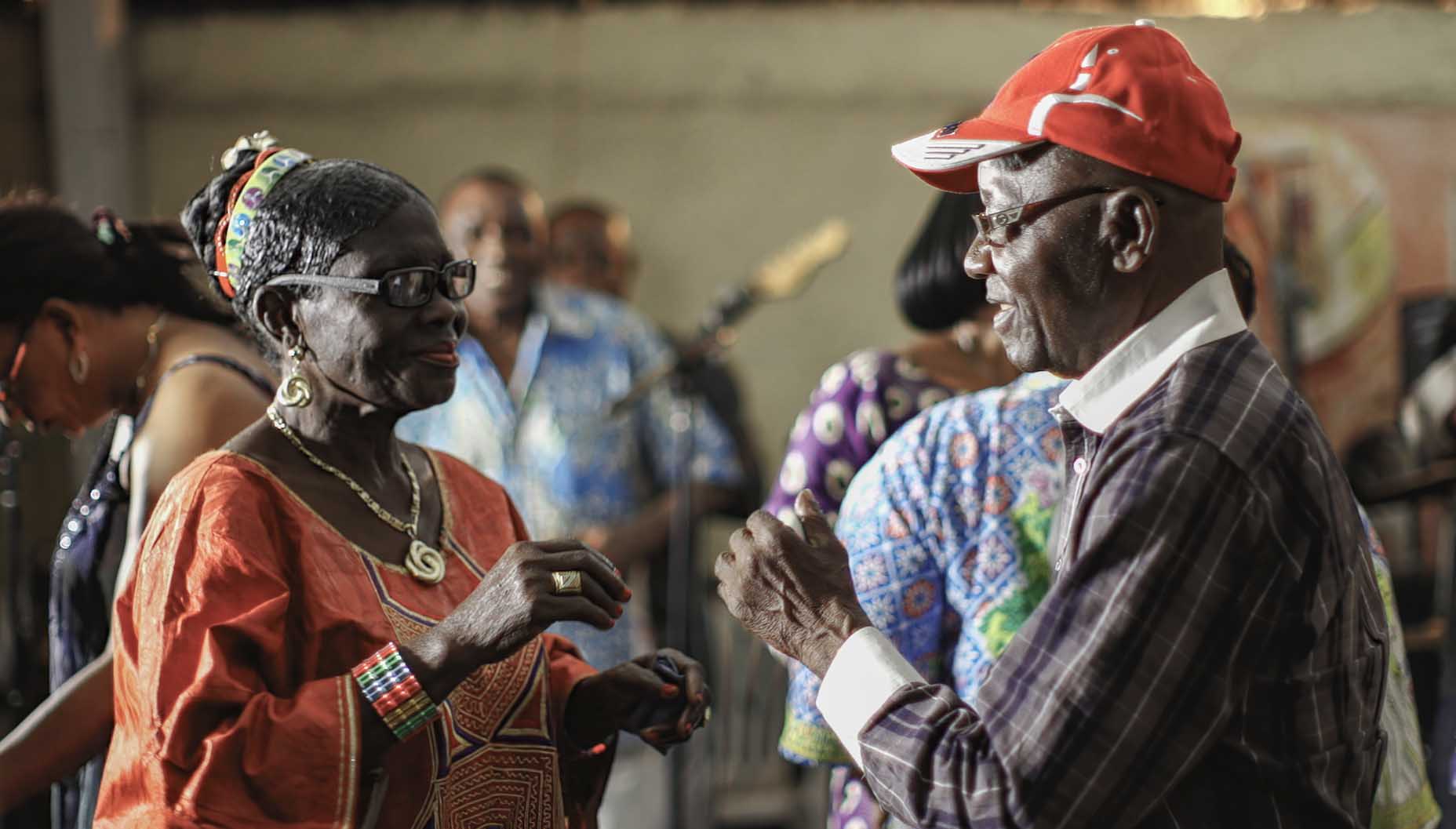
The Rumba Kings is a joyous exploration of the liberating power of music.
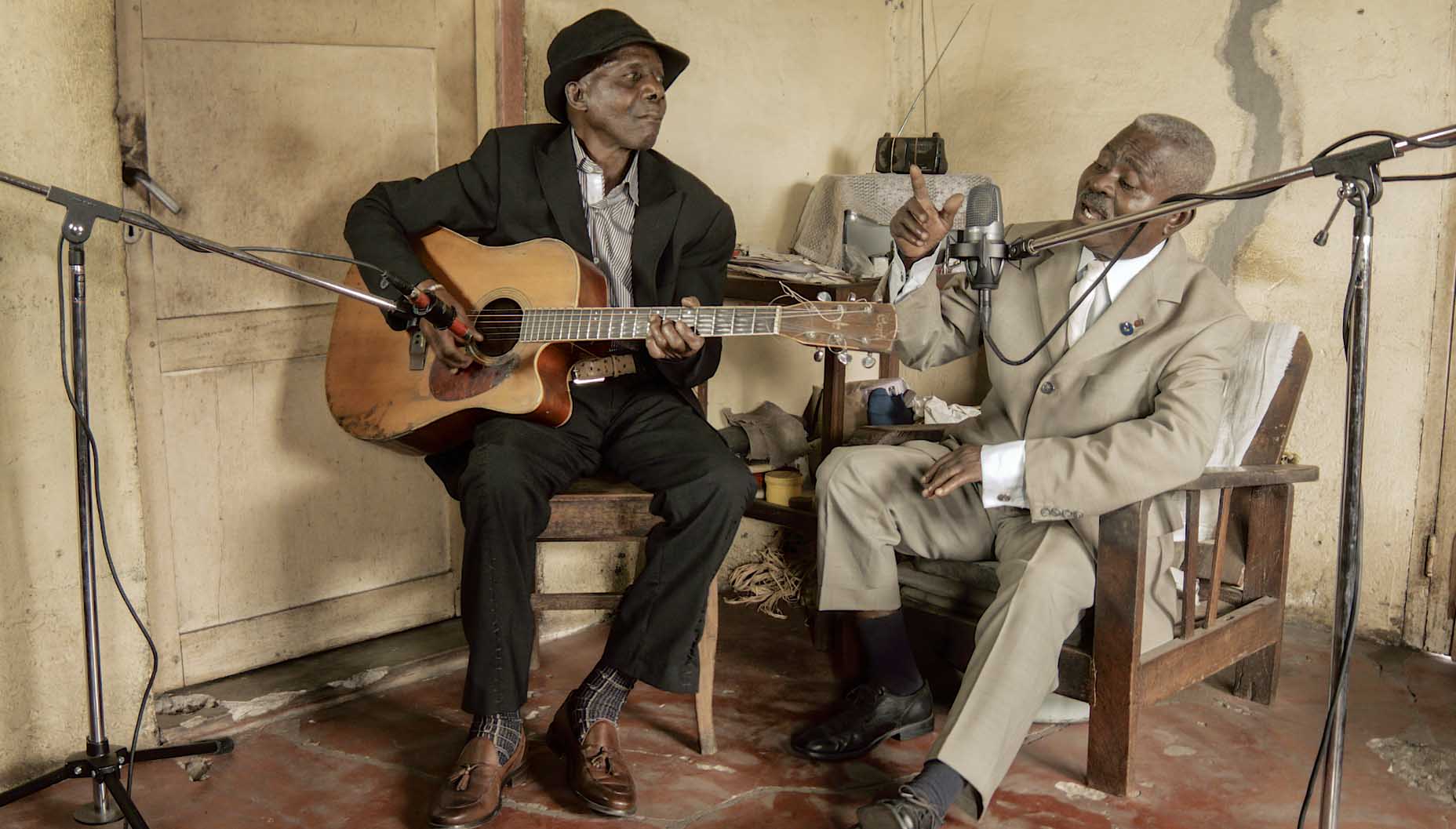
In the 1950s, when the Democratic Republic of the Congo was still under harsh Belgian colonial rule, a generation of Congolese musicians decided to use popular music to fight back. They fused traditional African rhythms with Afro-Cuban sounds to create Congolese rumba, an infectious groove that carved out a space of freedom and resistance against the cruelty and humiliation of subjugation.
The beat never stopped. Congolese rumba carried the country through its quest for independence, producing the most famous African independence anthem ever written, conquering the entire continent with its captivating guitar sounds, and forging the identity of a nation. Artists like Franco Luambo and the OK Jazz orchestra, Grand Kallé and Dr. Nico and the African Jazz orchestra became as celebrated across Africa as any western rock band.
On one level, The Rumba Kings is the stunning story of how a sound was born and conquered a continent. On another, it is an emotional statement about how music can break barriers, heal wounds, and bring hope. Through original interviews, archival footage, and never-before-seen live performances, this is the journey of the sound that shaped a nation.
Sit back, press play, pump up the volume , and meet The Rumba Kings. Because Congo's real treasure does not lie underground.
I spent seven years in the Democratic Republic of the Congo, from 2007 to 2014, working as a filmmaker for the United Nations peacekeeping mission. When I arrived, I knew nothing about Congo's extraordinary musical tradition. I had no idea that just a few decades earlier, Congo had been seen by much of Africa as the land of the musical gods, that artists like Franco Luambo and the OK Jazz orchestra were as celebrated across the continent as The Beatles were in the West.
My education began with a single song. The first time I heard "Indépendance Cha Cha" by the African Jazz orchestra, I was stopped in my tracks, by the groove, and by the story behind it. In 1960, a dream team of Congolese rumba musicians accompanied the country's politicians to the independence negotiations in Brussels. Every night, while the diplomats deliberated Congo's future by day, those same musicians played concerts for them to dance. Then they composed a song about the moment that became the soundtrack not just for Congo's independence, but for the liberation of an entire continent.
I kept asking myself: why had I never heard any of this before?
I was fifteen years old when I first heard The Beatles, growing up in Lima, Peru. I was forty when I first heard Franco Luambo. That gap, those twenty-five lost years, says everything about the wall that Western cultural hegemony has built around Africa's artistic wealth. There are musical giants sitting behind that wall. Had they been born in New York, London, or Paris, there would be hundreds of books written about their lives and their music reissued a dozen times over.
When it came to telling this story, the answer was clear. As Congolese independence hero Patrice Lumumba wrote from prison weeks before his assassination: "Africa will write its own history, and it will be, to the north and to the south of the Sahara, a history of glory and dignity."
I am not Congolese, I am Peruvian-American. But I have done my best to honor those words. This story needed to be told by Congolese themselves.
The world knows Congo for its mineral wealth and the conflicts that wealth has fueled. Far fewer people know about Congo's real treasure.